Avoid common gardening mistakes on small Earls Court patios
Small patios can be wonderfully rewarding. They sit close to the house, catch a bit of morning light, and often become the one place you can actually hear yourself think. But if you are trying to avoid common gardening mistakes on small Earls Court patios, the same tight space that makes them cosy can also make them awkward. One oversized pot, one thirsty plant in the wrong corner, or one slippery surface, and suddenly the whole area feels crowded, cluttered, or just plain tired.
This guide breaks down the practical mistakes people make again and again on compact patios in Earls Court, why they matter, and what to do instead. You will find straightforward steps, real-world examples, a comparison table, a checklist, and a few local-aware tips that make small-space gardening much easier to get right. Truth be told, a patio does not need to be packed with plants to feel alive. It just needs the right choices in the right places.
Table of Contents
- Why avoiding common gardening mistakes on small Earls Court patios matters
- How small patio gardening works
- Key benefits and practical advantages
- Who this is for and when it makes sense
- Step-by-step guidance
- Expert tips for better results
- Common mistakes to avoid
- Tools, resources and recommendations
- Law, compliance, standards, or best practice
- Options, methods, or comparison table
- Case study or real-world example
- Practical checklist
- Conclusion
- Frequently asked questions
Why avoiding common gardening mistakes on small Earls Court patios matters
On a small patio, every decision has a visible consequence. That is the whole game. In a bigger garden, a slightly off-balance pot arrangement or a plant that grows too large can fade into the background. On a compact Earls Court patio, there is no background. Everything is front and centre.
When people make the usual mistakes, the space can quickly become hard to use. Paths narrow. Drainage suffers. Plants shade each other out. A few ignored leaves become slippery underfoot, especially after a wet spell. And because patios are often close to kitchen doors or sitting areas, the mess feels more noticeable than it would in a larger garden.
There is also a maintenance angle. Small patios should be easier to care for, not more stressful. If you choose the wrong containers, the wrong compost, or the wrong planting layout, you end up doing more watering, more pruning, more moving things around, and more second-guessing. Nobody wants that on a Tuesday evening after work.
For local homes and flats around Earls Court, space is usually at a premium. So the aim is not to do more gardening. It is to do better gardening, with fewer wasted steps and fewer expensive do-overs.
Key takeaway: on a small patio, restraint is not boring; it is usually the difference between a calm, usable space and one that feels cramped within weeks.
How avoiding common gardening mistakes on small Earls Court patios works
Small-space gardening works best when you think in layers: light, water, movement, height, and maintenance. That sounds a bit technical, but it is really just a practical way of asking: where does the sun go, where does the water drain, how do you still walk through the space, and what will this look like in six months rather than six days?
The main principle is simple. Every item on the patio should earn its place. A pot should either add beauty, structure, edible produce, privacy, or seasonal colour. Ideally, more than one of those. The same goes for benches, screens, trellises, and decorative stones. If it does not help the space function or feel better, it is probably taking up valuable room.
In Earls Court, many patios are shaded by buildings for part of the day, and that changes the planting logic quite a lot. Shade-tolerant plants, reflective surfaces, and vertical features often work better than trying to force a full sun cottage-garden feel into a north-facing corner. That is where many small patio projects go sideways. People buy plants for the fantasy, not the actual light conditions.
Once you match the patio to the conditions it really has, not the conditions you wish it had, everything becomes easier. Plants settle. Watering becomes more predictable. And the space starts feeling intentional rather than accidental.
Key benefits and practical advantages
A well-planned small patio can do a lot. More than people expect, actually.
- Better use of limited space: smart layout means you can fit planting, seating, and circulation without crowding.
- Easier upkeep: the right plants and containers reduce constant pruning, re-potting, and rescue work.
- Improved visual balance: height, texture, and colour can make a tiny patio feel deeper and more welcoming.
- Safer surfaces: cleaner, better-drained patios are less likely to become slippery or messy.
- More resilience: suitable planting and materials cope better with London weather swings, from damp spells to sudden heat.
- Better value from every purchase: fewer impulse buys, less waste, and less replacing of plants that were never right for the space.
The real advantage is peace of mind. A small patio should not feel like a project that is always half-finished. It should feel manageable. That is a pretty big win in a city where outdoor space can be precious and, let's face it, a little neglected if it becomes difficult to maintain.
If your patio is part of a broader garden refresh, it may also help to look at garden maintenance support or consider whether some elements need a more planned approach through landscaping. Sometimes the quickest improvement is not more planting, but a cleaner framework.
Who this is for and when it makes sense
This advice is for anyone with a compact patio who wants it to look good without becoming a chore. That includes flat owners, tenants with permission to improve the space, landlords wanting a more presentable outdoor area, and homeowners who are trying to make a small courtyard or terrace feel calmer and more usable.
It also makes sense if you have already made a few mistakes and are trying to reset. Maybe the pots are too big. Maybe the plants are not thriving. Maybe the patio feels cramped every time you open the back door. You are not alone there. Plenty of small gardens start with good intentions and end up with too many mismatched containers. Happens all the time.
It is especially useful if:
- your patio gets partial shade or only a few hours of sun
- you want low-maintenance planting
- you need space for chairs, a bistro table, or storage
- you are dealing with poor drainage or moss build-up
- you want to improve privacy without making the area feel boxed in
- you plan to use container planting, raised planters, or decking features
If the patio also needs a bigger clean-up before you begin, a focused garden clearance service can help you start from a usable baseline rather than trying to garden around old debris, broken pots, and worn-out compost bags.
Step-by-step guidance
Here is a practical way to approach a small Earls Court patio without making the usual errors.
1. Clear the space properly first
Start with a reset. Remove dead plants, cracked containers, mossy trays, stray stones, and anything you have stopped noticing because it has been there too long. You will see the patio differently once it is cleared. That first tidy-up often changes the whole mood of the project.
2. Check sun, shade, and drainage
Spend a day watching where light lands and where water pools after rain. Do not guess. A plant that looks brilliant in a shop may sulk endlessly if it is in the wrong spot. If drainage is poor, raise containers slightly and avoid placing everything flush against walls where damp can hang around.
3. Decide the job of each area
Ask what each part of the patio needs to do. One zone might be for seating. Another might hold taller pots for privacy. A corner might be reserved for herbs or edible plants. The space becomes much easier to manage once every square metre has a purpose.
4. Choose fewer, better containers
Big is not always better. A handful of strong, well-proportioned pots usually works better than a crowd of tiny ones. Mixed shapes can look stylish, but keep the palette tight. Too many colours or styles and the whole patio starts to look like a clearance aisle in disguise. No one wants that, not really.
5. Match plants to the actual conditions
Use compact, slow-growing or easily managed plants where possible. Think about mature size, not just the label today. If a plant wants to sprawl, it will do so eventually. On a patio, that can be a problem very quickly.
6. Keep vertical space in play
Use walls, trellises, and planters to draw the eye up. Vertical planting is one of the best tricks for small spaces because it saves floor area while still adding softness and height. It can also help with privacy if neighbouring windows overlook the patio.
7. Set a maintenance rhythm
A small patio only stays attractive if the routine stays simple. Water little and often when needed, deadhead spent flowers, trim back vigorous growth, and sweep regularly. A ten-minute weekly sweep is usually better than a heroic monthly clean-up that you dread for two days in advance.
If you know the patio will need ongoing upkeep, it may be worth looking at lawn mowing or hedge trimming only where those services relate to nearby boundary planting or adjoining garden sections. Not every outdoor task belongs on the patio itself, but the overall garden picture often affects how the patio feels.
Expert tips for better results
Here are the things that make a real difference once the basics are in place.
- Use repetition for calm: repeating one pot style or plant type can make the space feel larger and less busy.
- Keep a narrow path clear: even a tiny walking line matters. If you block it, the patio feels smaller immediately.
- Think in seasons: spring bulbs, summer flowering pots, autumn structure, and winter evergreens all play different roles.
- Watch weight limits on terraces and upper-level spaces: especially if you are using large planters, water features, or heavy soil. If you are unsure, get proper guidance before loading a structure with weight.
- Use lighter-coloured surfaces carefully: they can brighten a shady patio, but they also show dirt faster. A fair trade, perhaps.
- Build in at least one easy-win feature: a single well-chosen planter, a neat bench, or a handsome screen often does more than ten smaller distractions.
One more thing: do not underestimate the value of a tidy edge. A crisp border between paving and planting can make a small patio look much more deliberate. That tiny detail, oddly enough, often gives the whole space a calmer feel by late afternoon when the light drops and everything looks softer.
Common mistakes to avoid
This is the section that saves the most time, money, and annoyance.
1. Choosing plants without checking mature size
This is probably the most common mistake. A plant that looks polite in spring can become a space thief by midsummer. Always check its eventual height, spread, and whether it needs regular pruning.
2. Overcrowding the patio
More plants do not automatically mean a better-looking patio. In small spaces, too many objects create visual noise and make maintenance harder. Leave breathing room.
3. Ignoring drainage
Water sitting under pots, blocked gullies, or compacted soil in containers can lead to root problems and slippery surfaces. If water is lingering after rain, sort that out early.
4. Using containers that are too small
Small pots dry out quickly, need constant watering, and can restrict root growth. They also tend to topple more easily in wind. Bigger containers are often easier to manage than people think.
5. Forgetting light levels
Shade-loving plants planted in sun will scorch. Sun-lovers in shade will stretch and weaken. Both outcomes are frustrating, and both are avoidable.
6. Mixing too many styles
Different materials can work well, but if every pot, chair, and planter is a different colour or finish, the patio can feel fragmented. Keep the palette controlled.
7. Neglecting regular cleanup
Moss, fallen petals, leaf litter, and old compost all add up fast in a small area. It only takes a few damp days for things to look neglected.
8. Skipping a plan for privacy
If you are overlooked, the patio may never feel restful unless you think about screening. Tall planters, climbers, or a carefully placed structure can help without making the area feel fenced in.
9. Choosing materials that are hard to maintain
Very rough stone, cheap untreated timber, or fragile decorative items can become hassle quickly. On a compact patio, low-fuss usually wins.
10. Treating the patio like a full garden bed
A patio is a hard-landscaped space first. It needs planting, yes, but also surface care, drainage, and circulation. If you ignore the hard landscape, the planting has to work too hard.
If the issue is not just planting but the patio structure itself, the answer may sit closer to decking services or broader landscape gardening rather than more pots. Sometimes the fix is structural, not decorative.
Tools, resources and recommendations
You do not need a shed full of kit to manage a small patio well. In fact, too many tools can become part of the clutter problem.
- Sturdy gloves: useful for pruning, repotting, and handling rough surfaces.
- Hand trowel and hand fork: enough for most container work.
- Watering can or hose with controlled flow: better than soaking everything indiscriminately.
- Secateurs: for deadheading, shaping, and keeping plants compact.
- Broom and dustpan or small patio brush: simple, but genuinely useful.
- Moisture-retentive compost: especially helpful for hot or exposed spots.
- Lightweight pot feet or raisers: useful to improve drainage and airflow under containers.
For ongoing care, many people prefer a maintenance plan rather than occasional rescue jobs. If that sounds like you, garden maintenance can be a practical way to keep the space presentable without allowing the usual small problems to snowball.
And if you are comparing services or trying to understand how a job might be priced, the page on pricing and quotes is a sensible place to start. Costs vary with access, materials, the amount of clearing needed, and whether any structural work is involved. It is best to ask rather than assume.
Law, compliance, standards, or best practice
For most patio gardening, the practical emphasis is on safety, sensible maintenance, and good neighbourly management rather than complicated legal rules. Still, there are a few things worth keeping in mind in a London setting.
If your patio is part of a rented property, shared space, or a building with management conditions, check before making changes to layout, screening, or fixed features. That is especially true if you want to add decking, heavy containers, or anything that could affect access or drainage. For anything structural, best practice is to get proper advice rather than guess.
Safety matters too. Wet paving, unstable pots, trailing hose pipes, and damaged surfaces can cause avoidable accidents. If you are working at height on upper-level terraces, treat that with care and use appropriate access methods. Nothing glamorous about a twisted ankle on a tiny patio. Absolutely nothing.
Good practice also means considering waste and sustainability. Compost, old pots, clippings, and surplus materials should be dealt with responsibly. If you are clearing a lot out, the team behind recycling and sustainability may be relevant to how green waste and usable materials are handled. It is a small point, but it matters more than people think.
Finally, if you want reassurance around who is carrying out the work, pages such as insurance and safety and health and safety policy can help set expectations about professional standards and safe working practices. That is especially useful if the patio is awkward to access or close to shared entrances.
Options, methods, or comparison table
There is more than one way to improve a small patio. The right option depends on how much time, budget, and flexibility you have.
| Approach | Best for | Pros | Watch out for |
|---|---|---|---|
| Container-only planting | Renters, small budgets, flexible layouts | Easy to change, low commitment, good for seasonal updates | Can look cluttered if overdone; needs regular watering |
| Mixed pots and vertical features | Overlooked patios, narrow spaces, privacy needs | Saves floor space, adds height and structure | Must be balanced carefully to avoid a crowded feel |
| Light landscaping reset | Patios with poor layout or tired surfaces | Improves flow, drainage, and overall usability | More planning needed; may involve higher cost |
| Decking or raised zones | Uneven surfaces, levels, or design refreshes | Creates definition and can make the space feel larger | Needs proper installation and upkeep |
For many small Earls Court patios, the winning combination is not one method in isolation but a careful mix. A little structure, a few well-chosen plants, and a surface that is easy to sweep often beats a heavily planted look that is impossible to maintain.
Case study or real-world example
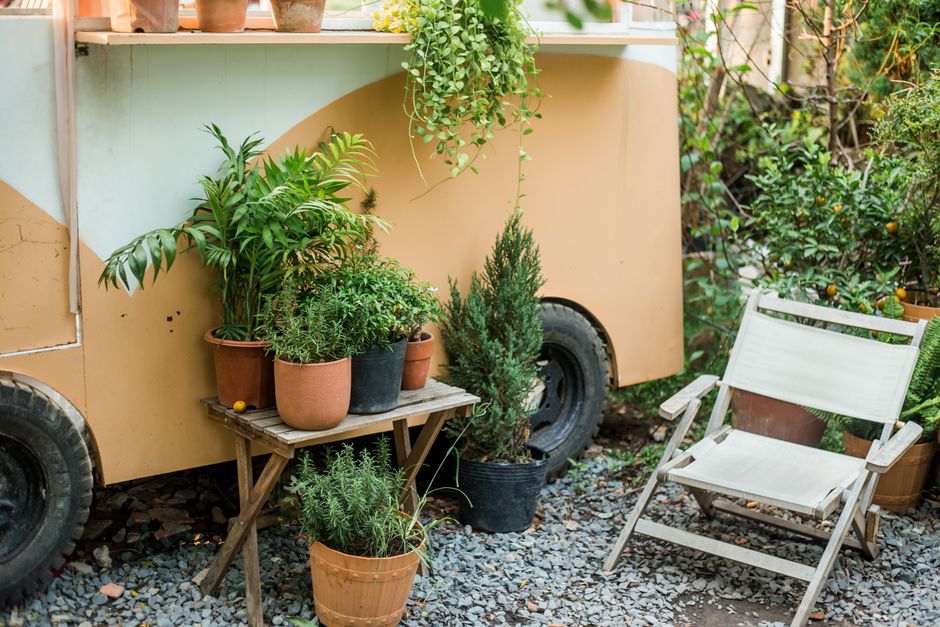
Imagine a modest ground-floor patio behind a flat near Earl's Court Road. It has half-day shade, a narrow layout, and a couple of old containers that have become home to more moss than flowers. The owner wants it to feel welcoming enough for morning coffee, but not so busy that maintenance becomes a burden.
The first mistake would be buying more plants straight away. Instead, the space is cleared, the drainage is checked, and the old mismatched pots are reduced to a smaller, tighter group. A tall but slim planter is placed where it can provide softness without blocking access. Shade-tolerant plants are used near the back wall, and one repeated container style ties everything together visually.
By the time the job settles in, the patio feels calmer, brighter, and less awkward to move through. The owner can still sit out with a cup of tea, and the whole thing is far easier to maintain. No drama. No overpacking. Just a small space doing its job properly.
That is the pattern, really. Most patios do not fail because people care too little. They fail because they care in the wrong direction at the beginning. A few better choices change everything.
Practical checklist
Use this checklist before you buy plants or move furniture around again.
- Have I checked how much sun and shade the patio actually gets?
- Have I cleared out dead plants, broken items, and surface debris?
- Do I know where water drains after rain?
- Are my containers sized for mature plant growth?
- Have I avoided overcrowding the floor space?
- Do my plants suit the light conditions here?
- Have I kept enough room for walking and sitting?
- Is there a clear plan for privacy if the patio is overlooked?
- Can I keep up the maintenance level this design requires?
- Do I need structural help, landscaping advice, or a deeper reset?
If you can answer yes to most of those, you are in good shape. If not, no panic. Small patios are forgiving once you start simplifying them.
Conclusion
The best way to avoid common gardening mistakes on small Earls Court patios is to work with the space, not against it. Keep the layout simple. Match plants to the light. Respect drainage. Use fewer, better items. And remember that the patio is there to be used, not just admired from the doorway.
When a small patio is well planned, it feels effortless even though the thinking behind it was careful. That is the sweet spot. A little privacy, a little colour, a surface you can trust after rain, and enough room to move a chair without bumping into a forest of pots. Lovely, really.
Get a free quote today and see how much you can save.
If you would like to explore the wider team behind these services, you can also learn more about the company or make an enquiry through the contact page. And if you are weighing up a broader garden refresh, the services overview is a sensible place to compare the options without rushing into anything.
Frequently Asked Questions
What are the most common gardening mistakes on a small patio?
The biggest mistakes are overcrowding, choosing plants that outgrow the space, ignoring drainage, and using too many different styles. On a small patio, these issues become obvious very quickly.
How do I make a small Earls Court patio look bigger?
Use fewer containers, repeat colours and materials, keep walking space open, and add vertical planting. A clear layout and some upward structure usually make the patio feel larger without any major building work.
Which plants work best in a shaded small patio?
Shade-tolerant plants are usually the safest choice, especially in courtyards and patio spaces that only get limited direct sun. The key is to match the plant to the actual conditions, not the ideal ones.
Should I use large or small pots on a compact patio?
In most cases, medium to larger pots work better than lots of tiny ones. They hold moisture more evenly, give roots more room, and often look calmer in a small space.
How often should a small patio garden be maintained?
A light weekly tidy-up is usually enough for many patios, with more attention during warm or windy weather. Regular sweeping, deadheading, and checking moisture levels keeps problems from building up.
Is decking a good idea for a small patio?
It can be, especially if you want to create a cleaner look or define levels. But it should be planned carefully so it does not make the area feel tighter or harder to maintain.
What should I do first if my patio is messy and overgrown?
Start with clearance. Remove dead growth, broken pots, and general clutter before buying anything new. It is much easier to design a good patio once you can actually see the space.
How do I stop a patio from becoming slippery?
Keep the surface clean, deal with moss quickly, improve drainage where possible, and avoid letting leaves or compost sit on the paving for too long. Simple routine care goes a long way here.
Do I need professional help for a small patio garden?
Not always, but professional help makes sense if the space needs clearing, redesigning, better drainage, or structural improvements. It can save time and prevent expensive mistakes.
What is the most budget-friendly way to improve a small patio?
Cleaning the area thoroughly, reducing clutter, reusing good containers, and choosing a few well-suited plants are often the cheapest and most effective improvements. A bit of restraint helps a lot.
Can I mix edible plants with ornamental planting on a patio?
Yes, and it works well in small spaces. Herbs, compact salads, and fruiting plants can sit happily alongside decorative containers as long as they get the right light and watering.
How do I know if my patio needs landscaping rather than simple planting?
If the space has poor flow, drainage problems, awkward levels, or tired hard surfaces, planting alone may not solve it. That is when landscape gardening or a more structural approach becomes more useful.